News & Updates

news

16 Jun 2026

Book Series “Higher Education. Linking Research, Policy and Practice”.

Call for contributions
Book Series “Higher Education. Linking Research, Policy and Practice”.

Authors who submitted a proposal to the EAIR Forum 2026 are cordially invited to submit their proposal as a contribution to the seventh book volume that will be published in Summer 2027. The theme of the book will be in line with the theme of the forum: Strengthening trust between higher education and society”.

See more details

Authors who submitted a proposal to the EAIR Forum 2026 are cordially invited to submit their proposal as a contribution to the seventh book volume that will be published in Summer 2027. The theme of the book will be in line with the theme of the forum: “Strengthening trust between higher education and society”

See more details

news

1 Jun 2026

2026 EAIR OUTSTANDING PAPER AWARD

The EAIR invites colleagues who are 35 years of age or younger at the time of the Forum to participate in the competition for the EAIR Outstanding Paper Award.

See more details


The EAIR invites colleagues who are 35 years of age or younger at the time of the Forum to participate in the competition for the EAIR Outstanding Paper Award.

See more details

news, Practical information

9 Mar 2026

Travelling to Vilnius

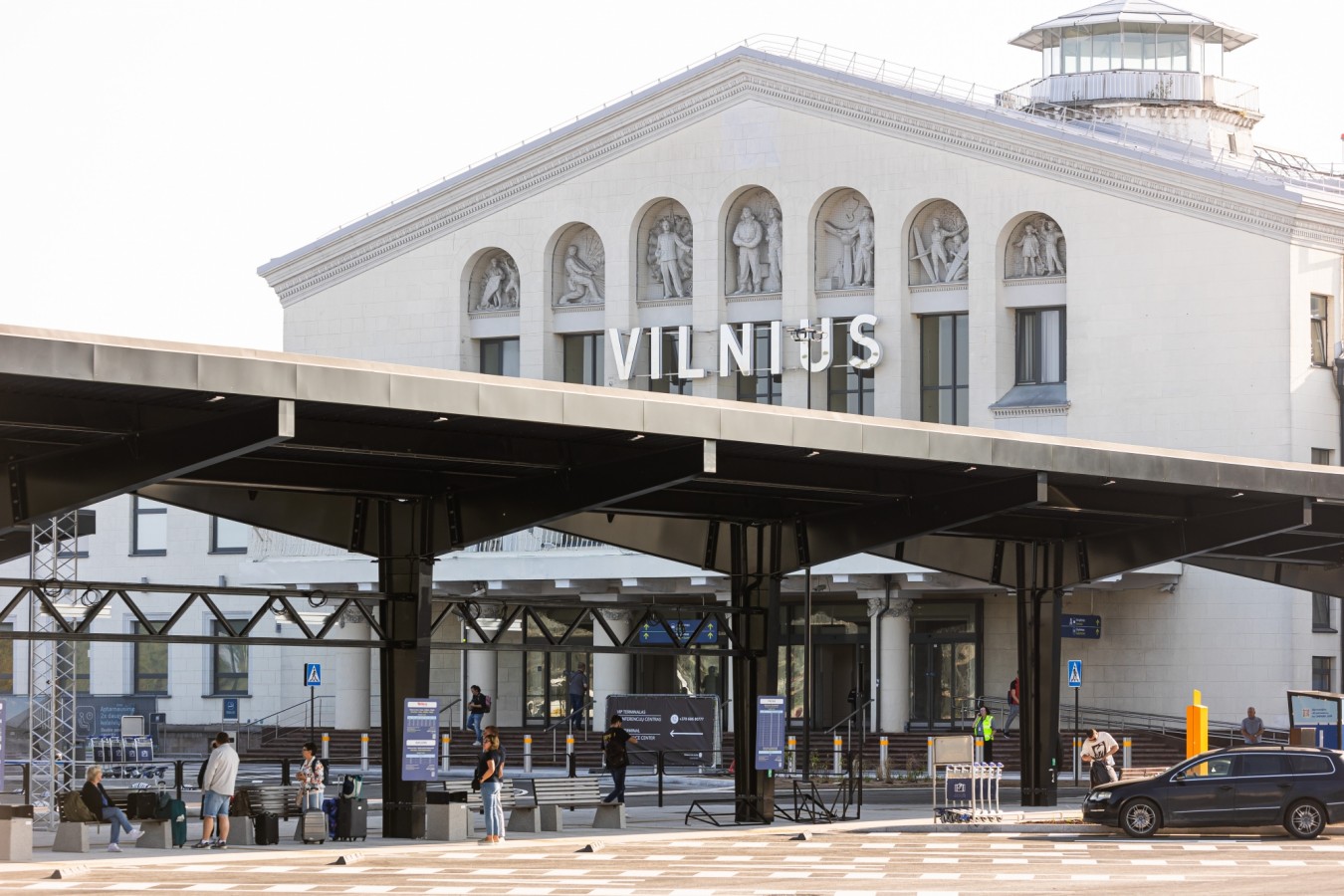
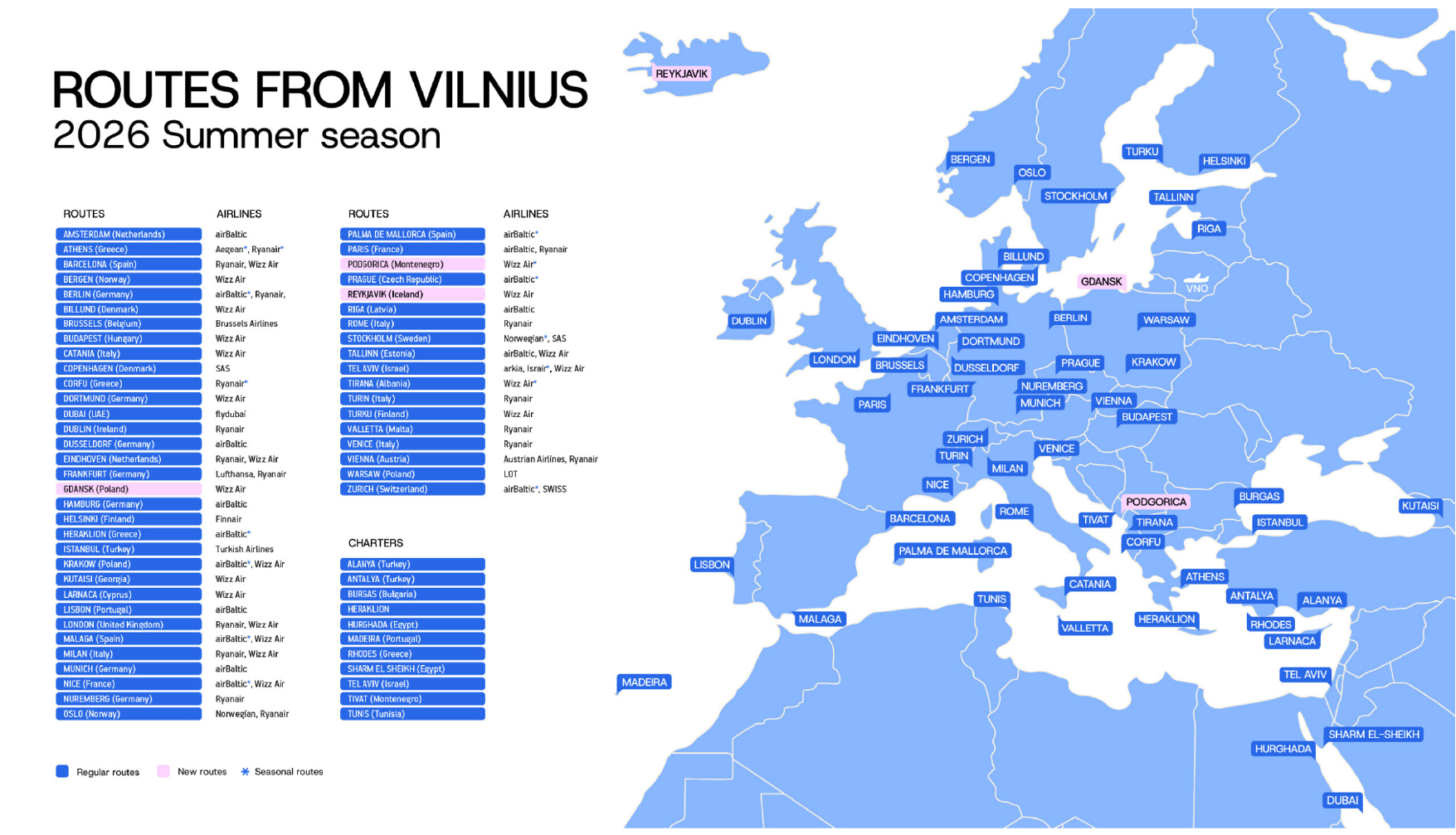
Currently, more than 15 airlines offer direct flights to 40+ destinations from Vilnius International Airport, with flight durations of 3 hours or less. Vilnius Airport is only a 15-minute taxi ride from the city centre. For more detailed information about the services provided at the airport, see www.vno.lt. It should be noted that Lithuania is part of the Schengen Area, and travellers from many countries can enter visa-free for short stays.

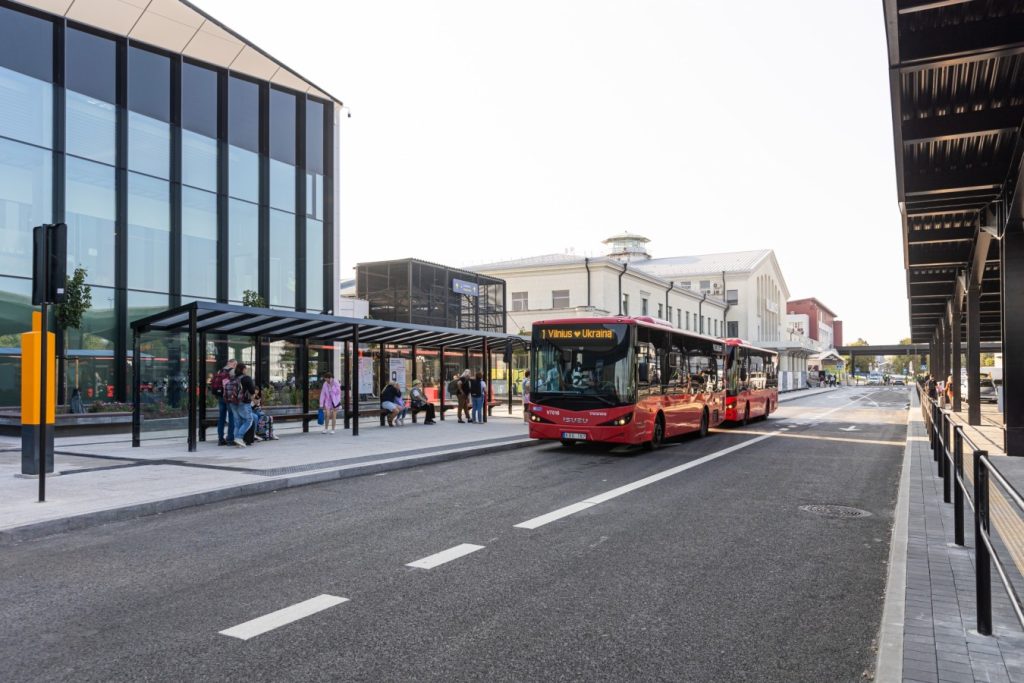
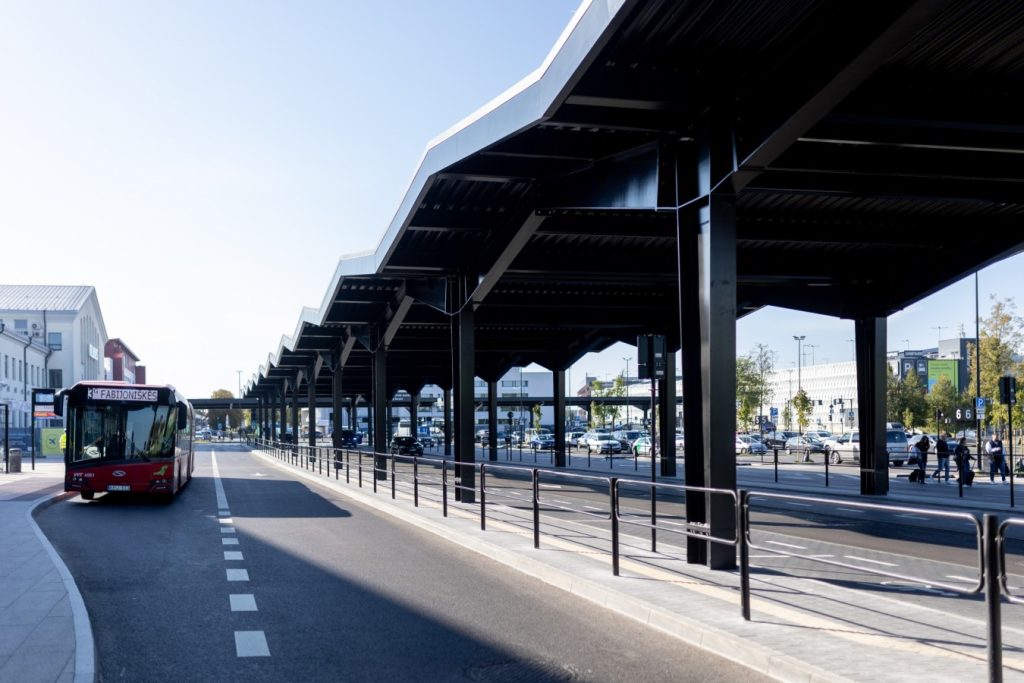
Vilnius is perfectly sized for getting around. Even if you have a house or apartment on the outskirts, the centre is only a short 30-minute commute at most. The city also boasts a modern, integrated public transportation infrastructure, with trolley buses and buses connecting every corner of the city.

Getting to and from the airport

Once you have arrived at the airport, getting to the city centre could not be easier. The airport is only a 15-minute ride to the city centre by bus or taxi, and by train, it is only 7 minutes to the city’s railway station. More information available on www.vno.lt

Getting to the city centre by bus

There is a direct bus from Vilnius city to Vilnius Airport. A single ticket costs €1 and can be purchased on board using a credit or debit card. It takes about 20 minutes to reach the city centre.

No. 3G – Airport–Center–Fabijoniškės No. 1 – Airport– Vikingai St.–Station No. 2 – Airport– Vikingai–Liepkalnio St.–Station No. 88 – Airport–Center–Europa square No. 88N* – Airport–Center–Europa square

*88 bus runs at night from 22:30 to 05:30. Bus times are available at bus stops or on the website www.stops.lt

Getting to the city centre by train

The special "Vilnius-Airport" train runs regularly from Vilnius railway station to the airport and back. Trains run 16 times per day, and the journey takes 7 minutes. A single ticket costs €0.70 and can be purchased online, on the train or at the railway station.

The schedules can be found at www.ltglink.lt.

Getting to the Venue

The Forum venue is located in the historic centre of Vilnius, close to the Old Town, Universiteto g. 9, Vilnius, 01122. The Old Town area is very walkable, and most hotels recommended for participants are within short walking distance of the university.

Taste Vilnius

Vilnius is a feast for the curious, where centuries-old flavors meet playful modern cooking. From noble Lithuanian tasting menus to cozy bistros, natural wine bars, and buzzing cocktail spots, the city serves food meant to be shared, savored, and talked about. Meals unfold slowly here, guided by seasonality, local ingredients, and a love of good company - making every bite part of the story.

Vilnius [unexpectedly amazing]

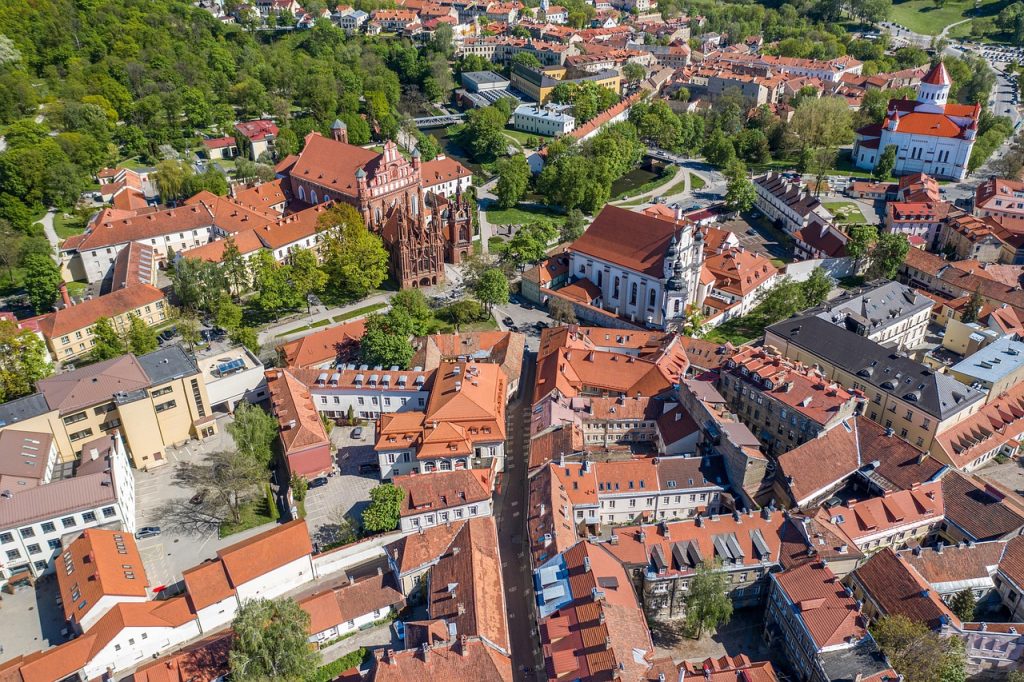
Vilnius can take you by surprise - many of the Lithuanian capital’s most beautiful secrets are kept in plain sight for all to see, and somehow there’s not too much talk about them. The UNESCO-listed medieval Old Town is home to many historical buildings and luscious parks, and the past is closely intertwined with the present. Modern street art installations, contemporary cuisine, and adventurous leisure activities are the perfect mix for a memorable getaway.

This guide gives you dozens of puzzle pieces to create your own picture of Vilnius as you see it. Welcome!

Weather

Vilnius has a continental climate with warm summers. In August, average daytime temperatures are typically 20–24°C with cooler evenings around 13–15°C. The weather can vary, so it is advisable to bring light layers and a small umbrella.

Currency & Payments

Currency: Euro (€). Credit and debit cards are widely accepted (Visa, Mastercard, contactless payments). ATMs are widely available across the city. Tipping is optional but appreciated (typically 5–10% in restaurants).

Useful Apps

To make your stay easier, the following apps are widely used in Vilnius:

Trafi – route planning for buses and trolleybuses
Bolt – taxis, scooters, and car sharing
Uber – an alternative taxi service
Google Maps – reliable for walking and transit directions

Mobile Connectivity

Vilnius offers excellent mobile connectivity:

  • 4G and 5G networks are widely available throughout the city.
  • Free Wi-Fi is available in many hotels, cafés, and public areas.
  • SIM cards can be purchased at the airport, supermarkets, and telecom shops.

Currently, more than 15 airlines offer direct flights to 40+ destinations from Vilnius International Airport, with flight durations of 3 hours or less. Vilnius Airport is only a 15-minute taxi ride from the city centre. For more detailed information about the services provided at the airport, see www.vno.lt. It should be noted that Lithuania is part of the Schengen Area, and travellers from many countries can enter visa-free for short stays.

Vilnius is perfectly sized for getting around. Even if you have a house or apartment on the outskirts, the centre is only a short 30-minute commute at most. The city also boasts a modern, integrated public transportation infrastructure, with trolley buses and buses connecting every corner of the city.

Continue reading

news

26 Feb 2026

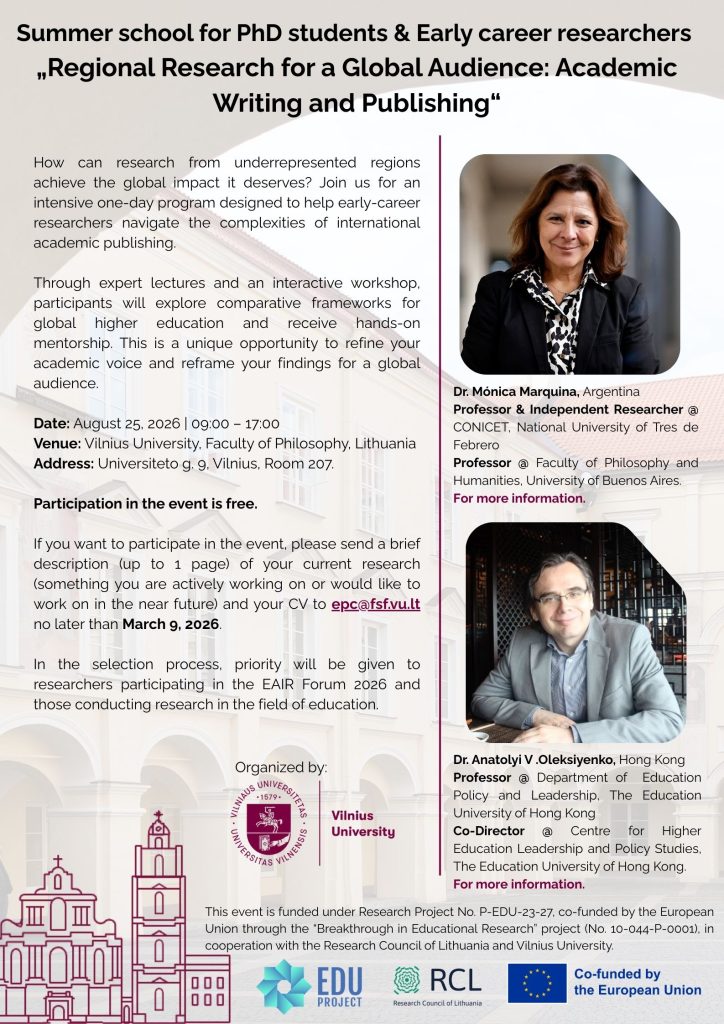
Regional Research for a Global Audience: Academic Writing and Publishing

One-Day Summer School for PhD Students and Early Career Researchers

EAIR is pleased to support a one-day summer school for PhD students and early career researchers in the social sciences, hosted by Vilnius University on 25 August 2026. The summer school takes place immediately before the EAIR Forum 2026, which will be held in Vilnius from 26 to 28 August.

About the Summer School

Through expert lectures and an interactive workshop, participants will explore comparative frameworks for global higher education research and receive hands-on mentorship on academic writing and publishing. The summer school offers a unique opportunity to refine your academic voice and learn how to frame your findings for an international audience.

Two distinguished experts have been invited to lead the sessions:

  • Prof. Dr. Monica Marquina
  • Prof. Dr. Anatoly Oleksiyenko

How to Apply

Participation in the summer school is free of charge. Applicants are invited to submit:

  • A brief description of their current research (maximum one page), outlining a project they are actively working on or wish to develop
  • A current CV

Applications should be sent to [email protected] by 9 March 2026. Please include “Application to EPC summer school” in the subject line.

Further details are available in the attached flyer.

We look forward to welcoming you to Vilnius.

One-Day Summer School for PhD Students and Early Career Researchers

EAIR is pleased to support a one-day summer school for PhD students and early career researchers in the social sciences, hosted by Vilnius University on 25 August 2026. The summer school takes place immediately before the EAIR Forum 2026, which will be held in Vilnius from 26 to 28 August.

Continue reading
Credits: Felix Schmale/TU Dortmund

news

11 Dec 2025

Welcome Message from EAIR’s New President
Prof. Liudvika Leišytė

Credits: Felix Schmale/TU Dortmund

Dear EAIR Members,

It is a great honour and joy to greet you for the first time as the new President of EAIR. Since its foundation in 1979, EAIR has grown into a vibrant international community where researchers, practitioners, and policymakers come together to connect research, policy, and practice in higher education.

I would like to thank you, our members, for your continued engagement and contributions — you are at the heart of EAIR. I also want to warmly thank the members of the Executive Committee for their tireless work, and I look forward to being in close contact with them as we continue to guide and strengthen our association together.

Allow me also to share a few words about myself. I am Professor of Higher Education and Deputy Director at the Center for Higher Education (zhb) at TU Dortmund University. I hold a PhD in Public Administration from the University of Twente, where I continue as a visiting senior scholar. Over the years, I have been privileged to work on numerous international and national research projects on changing university governance, management, interdisciplinarity, quality assurance, evaluation, and digitalization in higher education. My work has been published in leading international journals, and my latest book University Governance, Management and the Academic Profession was published by Springer in 2025. I have also had the pleasure of teaching and conducting research abroad, including at Harvard University, Nagoya University, and Sciences Po.

Looking ahead, I am eager to foster EAIR’s unique collaborative spirit while opening new pathways for dialogue, inclusivity, and innovation. Higher education faces many challenges — from digital transformation to academic freedom — and I believe EAIR is well placed to address these together.

I warmly invite you to remain active in our Forums and I look forward to meeting many of you at the EAIR Forum 2026 from August 27th to August 29th in Vilnius University in Lithuania.

With warm regards,
Liudvika Leišytė
President of EAIR

Dear EAIR Members, It is a great honour and joy to greet you for the first time as the new President of EAIR. Since its foundation in 1979, EAIR has grown into a vibrant international community where researchers, practitioners, and policymakers come together to connect research, policy, and practice in higher education. I would like to thank you, our members, for your continued engagement and contributions — you are at the heart of EAIR. I also want to warmly thank the members of the Executive Committee for their tireless work, and I look forward to being in close contact with them as we continue to guide and strengthen our association together.

Continue reading

news

4 Dec 2025

48th EAIR Annual Forum | Call for papers 2026

Strengthening trust between higher education and society

Higher education institutions have a symbiotic relationship with the societies they serve, be they local or global. In recent years, this relationship has encountered challenges on both sides (Berman & Paradeise, 2016). Major global concerns, armed conflicts, disinformation campaigns, all compound to erode the notion of truth and the precedence of facts and increasingly question the worth in and of higher education. The allure of simple answers to complex questions serves to undermine trust in and legitimacy of academia at large.

Higher education institutions, preoccupied with rankings, funding cuts, and multiple competitions (Krücken, 2021), struggle to counter these forces and meet the growing need to broaden the inclusion of diverse forms and actors for co-creation of knowledge (Mergner, Leišytė & Bosse, 2019). The sense of crisis of higher education threatens the dialogue between higher education and society. New models of higher education responsible governance, inclusion of stakeholder interests and building trust through dialogue and recognition are paramount more than ever before (Lamont, 2023).

The 48th EAIR Forum invites analyses of the current state of higher education and discussions on future possibilities and avenues for growth and transformative change. 

Track details

Track 1. Teaching, learning and student experience

How to foster a deeper connection between higher education and students as members of society? How can trust be nurtured between different stakeholders in higher education in the context of the growing role of AI, social media, and fake news? How to pursue an inclusive approach and engage students in current affairs and simultaneously maintain deep roots in pursuit of universal knowledge? How to support diverse students during their academic experience?

Track 2. Governance and management

How can institutional autonomy be upheld in a world in which universities are labelled enemies and pushed into deal-making and the core values of universities are under strain? What responsible governance models foster dialogue and trust within higher education institutions, as well as higher education and society? What challenges are university leaders facing in upholding and defending their mission to serve the society and how can they address these? What is the role of intermediary agencies in building or dismantling trust in higher education?

Track 3. Engagement and partnerships in higher education

What connections exist and can be built among higher education institutions and between higher education institutions and external stakeholders? What are the main drivers of partnerships that build communities within and beyond the national higher education contexts? What are the pathways to strengthen trust and foster deeper engagement between higher education and society?

Track 4. Academic profession and professional development

What transformations of the academic profession can be observed both locally and globally? How do these transformations influence academics’ trust in their own profession and what role does professional development play in this regard? How does the changing nature of academic work impact the research–teaching nexus, faculty well-being, connection to society, work pressure, diversity, and professional autonomy? What policies and practices promote trust between the academic profession and society?

Track 5. Research policy

How do the current geopolitical and technological challenges impact the research conducted in higher education as well as interactions within the scientific community? What kind of ethical concerns do higher education institutions and academics need to consider in response to these challenges? What are the challenges and opportunities brought on by the use of AI in research? How are the emerging approaches to academic recognition and reward (DORA and CoARA) changing the future of research and higher education?

Track 6. Evaluation in higher education

How is value redefined in the context of decreasing trust in higher education? How does recognition work in higher education today? How are evaluation regimes constructed in different higher education systems and what implications they have for the quality and the sense of worth of academics and students? What actors are included and excluded in the construction and enactment of evaluation regimes? Which purposes do quality assurance policies and practices in higher education serve and how does this influence trust in higher education?

This event is partially funded under Research Project No. P-EDU-23-27, co-funded by the European Union through the “Breakthrough in Educational Research” project (No. 10-044-P-0001), in cooperation with the Research Council of Lithuania and Vilnius University.

Strengthening trust between higher

education and society Higher education institutions have a symbiotic relationship with the societies they serve, be they local or global. In recent years, this relationship has encountered challenges on both sides (Berman & Paradeise, 2016). Major global concerns, armed conflicts, disinformation campaigns, all compound to erode the notion of truth and the precedence of facts and increasingly question the worth in and of higher education. The allure of simple answers to complex questions serves to undermine trust in and legitimacy of academia at large.

See details | Check agenda
Scroll to Top